
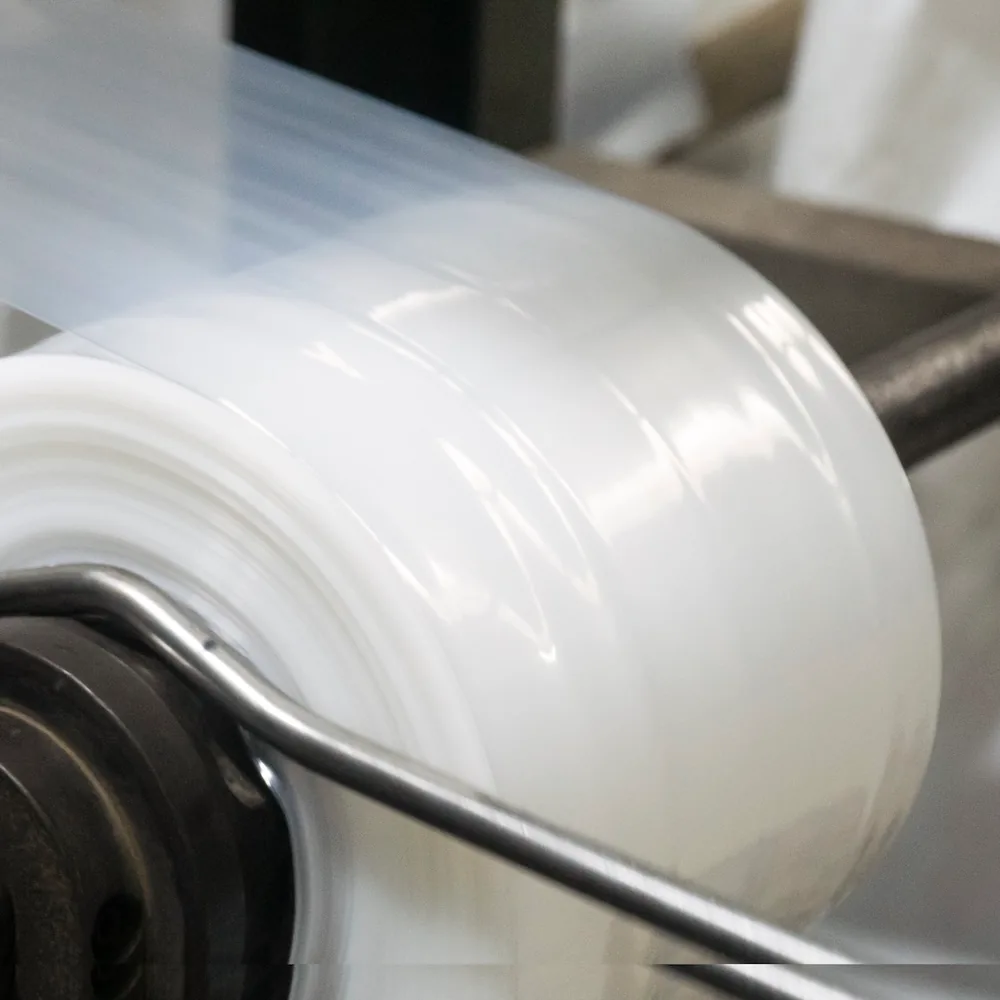
Polybag Guide: Material, Thickness, Form, and Process
Before you ask for a polybag quote, get to know the four things that drive your bag's protection, look, and cost: its material, its thickness, its form, and how we make and print it.
01
Material: PE, PP, and LDPE
There are seven plastic resin codes in general. But for the component packaging we run, three are relevant — and each behaves differently.
PE Polyethylene
More flexible and tear-resistant, from opaque to clear. The common choice for wrapping parts that need give and light impact protection.
PP Polypropylene
Clearer and stiffer, a sharper print surface, better moisture resistance. Used when a part needs a clear look or a bag that stands up better.
LDPE
Low-density polyethylene, the base for pre-opened roll bags on autobag machines. Flexible and consistent when run in long rolls.
Not a question of which is better: PE wins on flexibility and cost, PP wins on clarity and stiffness. We extrude the film ourselves, rather than buying it made and cutting it.
02
Thickness: Reading Micron Correctly
Polybag thickness is measured in micron (µm) or millimetres. The range we usually run is 30–120 µm (0.03–0.12 mm). The heavier or sharper the part, the thicker the bag it needs.
Every film has a thickness tolerance — small variation from sheet to sheet is normal in extrusion. What determines quality isn't the nominal micron figure, but how consistently that thickness is held to target. We produce to a controlled, measured tolerance on every batch.
How to read and compare micron figures correctly: reading polybag thickness →
03
Form: The Bag Types We Make
The form of the bag decides how the part goes in, how the bag holds its contents, and how fast it runs on your line. Here's what we make:
Flat Bag: Bottom-seal
Weld seal at the base. The most common and most economical form. Flat bottom, good for parts stacked or dropped in upright.
Flat Bag: Side-seal
Weld seal down both sides. Cleaner, straighter edges. Used when the side of the bag matters visually or the bag needs to look precise.
Gusset Bag
A fold on the sides (or base) that expands as the bag fills. Holds thicker or more three-dimensional parts without the bag pulling tight.
Pre-opened Roll Bag
LDPE bags pre-opened and joined on a roll, made for autobag machines on automated assembly lines. Few makers in Indonesia can run this.
Sizes are made to your part's dimensions, not a stock size. Need to know when a roll bag makes sense? Pre-opened roll bags for autobag machines →
04
Process: From Resin to Print
Extrusion (Blown Film)
We turn plastic resin into film ourselves via blown-film extrusion — not buying finished sheet. We can blow 5–100 cm wide, with cut or roll length 5–70 cm. That range covers everything from small-part bags to large bags for bulky components.
Cutting & Sealing
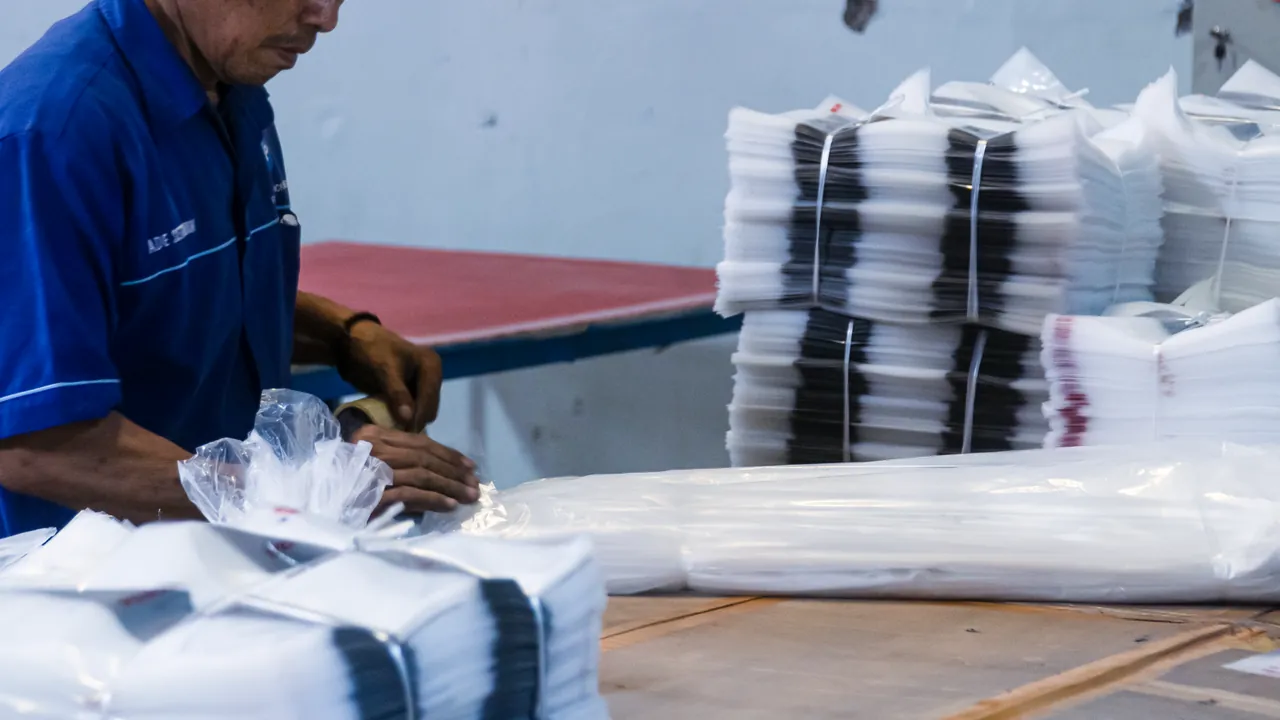
Film is cut and welded to shape — bottom-seal, side-seal, or gusset (see the Form section). The seal type is chosen from how the part goes in and how the bag will be used.
Printing (Flexo)
For part identification, a barcode area, or branding, we print directly on a flexo press, up to 3 colours, on the front and back. From film to print, it's all done on our own floor — one point of responsibility if anything needs adjusting.
Keep Learning
Got the basics? Here's what to read next before you send a spec.
Reading polybag thickness →
Micron, mm, and the common mistake when comparing quotes across suppliers.
Pre-opened roll bags for autobag machines →
When a roll bag makes sense, and why it's used on automated assembly lines.
Back to the polybag product page · corrugated carton box.
Still wondering about something?
Check the frequently asked questions.
MOQ, custom, flute, polybag, and the Flex-Stock program — answered short and direct.