One box that collapses in the middle of a stack can crush the parts inside it and stop the line at the receiving warehouse. Box Compression Test (BCT) is the way to measure, in numbers, how much stacking load a box can hold before it caves in. Before the problem happens in transit, not after.
What is the Box Compression Test (BCT)?
BCT measures a carton box’s resistance to vertical pressure. The box is pressed from top and bottom, step by step, until it deforms or collapses. The value is stated in Newtons (N) or kilogram-force (kgf). It shows the maximum load before the box fails structurally.
The value isn’t set by the board’s strength (ECT, Edge Crush Test) alone; the size of the box matters too. The same board can give very different BCT at two box sizes, as the example below shows.
How it’s tested
- Sample preparation: the box must be in ideal condition, with no defects or damage.
- Placement: the box is set on the test machine’s platform, top and bottom surfaces level.
- Applying pressure: the machine presses gradually until the box deforms or collapses.
- Recording: the maximum pressure before failure is recorded as the BCT value.
Factors that affect the BCT value
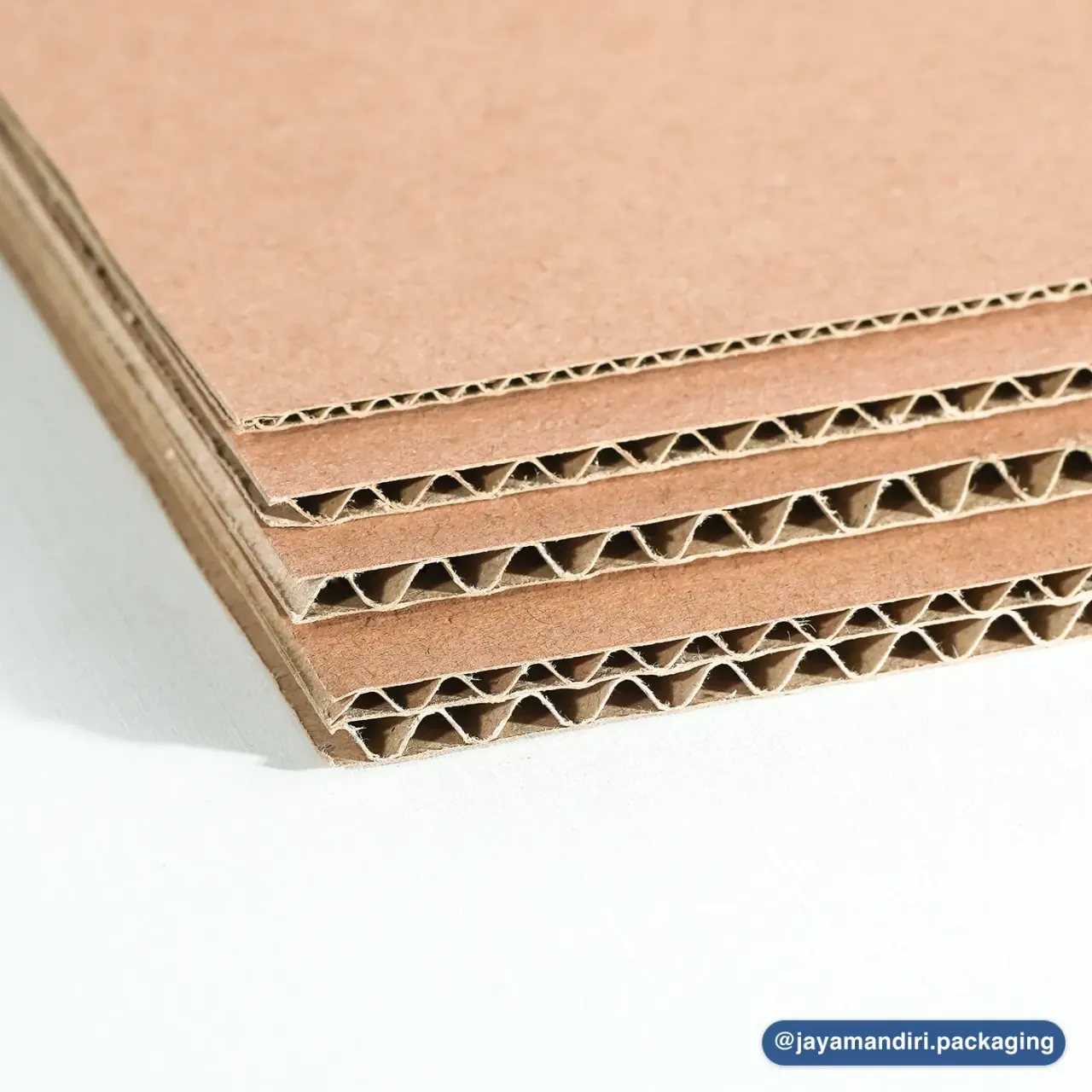
- Paper type & quality: thicker layers and stronger material raise the BCT.
- Flute structure: flute shape and size matter; C and B flute generally resist compression better than E-flute.
- Box dimensions: with the same board, a box with a larger perimeter carries a larger total load, because more wall is sharing it. That’s why a BCT figure always has to be quoted with the box size it belongs to.
- Humidity: high humidity softens the paper fibers and lowers the box’s strength.
Estimating BCT from ECT: the McKee formula
The estimate the industry uses most is the simplified McKee formula:
BCT ≈ 5.87 × ECT × √(board caliper × box perimeter)
Any units work as long as they’re consistent: ECT in N/mm, caliper and perimeter in mm, and the result comes out in newtons (divide by 9.81 for kgf).
Example with a C-flute ECT 32 board (about 5.6 N/mm), 4 mm total sheet thickness:
| Box size (length × width) | Perimeter | Estimated BCT |
|---|---|---|
| 400 × 300 mm | 1,400 mm | ± 2,460 N (± 250 kgf) |
| 200 × 150 mm | 700 mm | ± 1,740 N (± 180 kgf) |
Same board, different size: more than 70 kgf apart. A BCT figure without a box size can’t be compared.
This is an estimate for an RSC under lab conditions. Humidity, time in storage, handle holes and how the stack is built all lower the strength in a real warehouse, so field figures are usually lower. If your specification calls for a BCT number, we don’t test it ourselves: we calculate the structure first, then the sample boxes are tested at your site or at a lab of your choice before production.
Why BCT matters
- Protection guarantee: it ensures the packaging holds up under pressure during storage and shipping.
- Cost optimization: knowing the box’s load capacity means you can tune the material without sacrificing strength (no over-spec).
- Standards compliance: many customers require a specific strength specification; BCT helps meet it in a measurable way.
At JMP, this understanding of BCT is part of how we set the carton structure to follow your specification and part load — not an off-the-shelf catalog. Have a stacking requirement or a specific strength target? Send us the part details and we’ll work out the structure first.
Source: PT Jaya Mandiri Packaging (JMP) — carton box & polybag manufacturer for the automotive industry since 1990. jayamandiripackaging.com