

Carton Box Material: Corrugated Sheet, Paper, Grammage & Flute
A box's strength, look, and cost are all decided at the material level — from the structure of the corrugated sheet, to the type of paper, to the grammage (gsm), to the flute profile used.
Corrugated Sheet: What a Box Is Made of
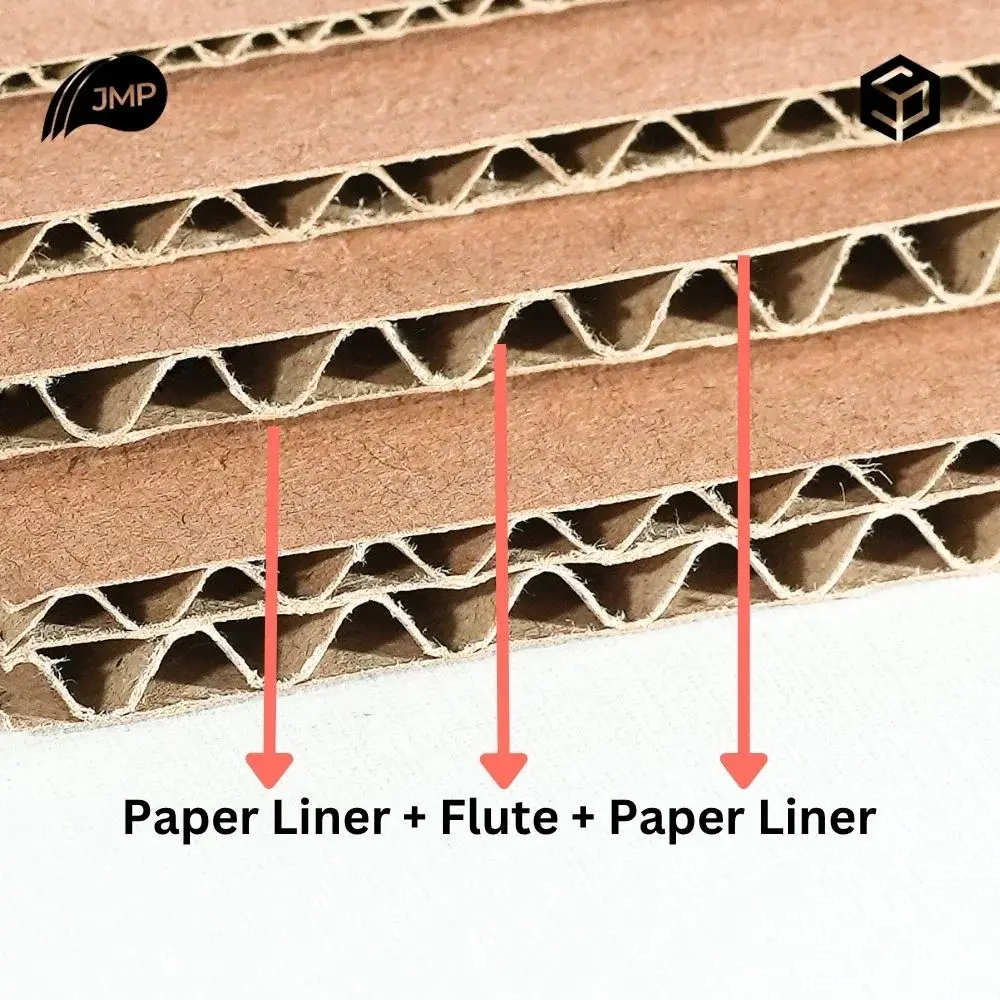
A corrugated sheet isn't plain cardboard. Its basic structure is three layers: two liners (the flat outer and inner paper) sandwich one fluted medium in the middle. The liners resist pulling and puncturing; the fluted medium is what absorbs pressure and cushions impact.
Single, Double, Triple Wall
The number of layers decides how much load the sheet can hold. More layers means more strength and more thickness.
Single wall
One medium between two liners. The most common structure — enough for the majority of shipping boxes.
Double wall
Two mediums and three liners. Stronger and more stack-resistant. For heavy parts or tall stacks.
Triple wall
Three mediums and four liners. Very strong — sometimes a replacement for a wooden crate on very heavy goods.
Paper Types: Kraft, White Kraft, Medium
Three paper types make up a sheet — two for the liners, one for the medium.
Kraft
Natural brown, with the wood fibre visible. The strongest and most economical of the three. Suited to industrial and functional needs.
White kraft
A clean white surface for a neater, more modern look, with strength on par with brown kraft. The print surface is sharper; it costs a little more.
Medium
The fluted paper in the middle, not visible from the outside. It doesn't show on the finished product, but it's the main determinant of a box's structural strength.
Grammage (gsm / Substance Weight)
A paper's weight and thickness are measured in grams per square metre (gsm). The higher the gsm, the stronger and the more expensive per metre. But a higher gsm can sometimes save money, because it takes less total material to reach the same strength.
Getting the substance weight right matters for three reasons: strength & protection (preventing damage in transit and under stacking), cost efficiency (thicker isn't always better), and appearance (a box that feels solid raises the perceived value of what's inside).
The grammages commonly carried in the Indonesian market
- 125 gsm — the lightest of the three common grades.
- 150 gsm — one step up.
- 200 gsm — the heaviest of the three, for more demanding work.
What often goes unnoticed: going from 125 to 200 gsm adds only about 0.2 mm to the board's thickness, while the gain in strength is far larger than that. It means a box can be made stronger without changing its external size — your pallet pattern and truck load stay as they are. We set the actual gsm from the weight, dimensions, and how the part is stacked — not one number for everything.
Flute Profiles
The flute is the wave shape in the medium. The taller the flute, the thicker the cushioning — but the more space and paper it takes. The tighter it is (a small flute like E), the smoother the surface for printing.
| Flute | Total board thickness (approx.) | Best suited to |
|---|---|---|
| E | ~1.5 mm | Small boxes, light parts; the smoothest print surface |
| B | ~3 mm | General-purpose boxes, crush- and puncture-resistant; single wall |
| C | ~4 mm | Medium–large boxes; better cushioning and stacking strength |
| BCdouble wall | ~7 mm | Heavy parts, tall stacks, long-distance shipments |
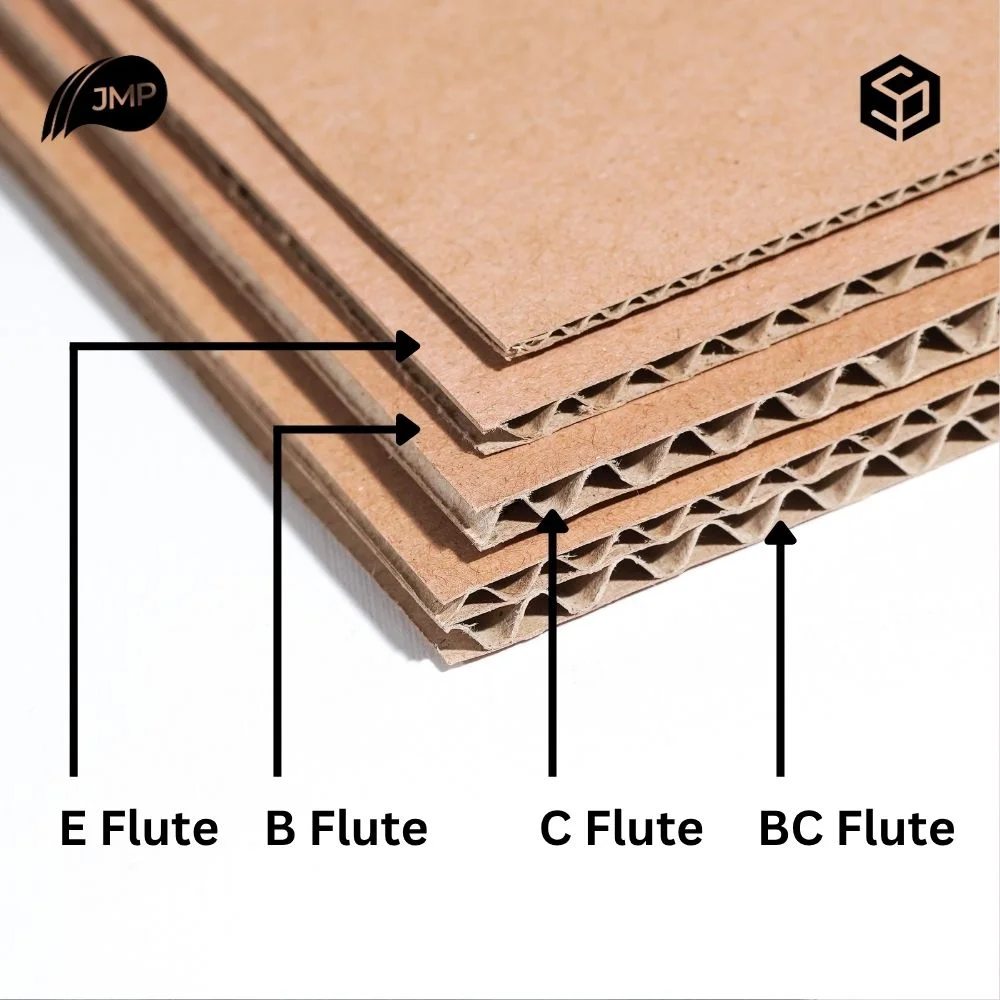
It depends on the box size and what it's for — in practice automotive parts most often land on C or BC; E and B are for small boxes, light parts, or a surface that has to stay clean for printing.
Inside Dimensions vs Outside Dimensions
Two related numbers with a different focus. Quoting the wrong one when you order is one of the most common causes of a box that doesn't fit.
Inside dimensions
The empty space inside the box (internal length × width × height). This decides whether the part fits and sits right — tight enough that it doesn't move, loose enough that it's easy to pack. This is the number that protects the part.
Outside dimensions
The total dimensions including wall thickness. This decides space efficiency, shipping cost, how many boxes fit per pallet/truck, and how the box looks on a shelf. This is the logistics number.
Inside dimensions protect the part; outside dimensions drive cost and handling. We calculate both from your part's dimensions and the wall thickness chosen.
| Construction | Length | Width | Height |
|---|---|---|---|
| Single wall B & C flute | +5 mm | +5 mm | +10 mm |
| Double wall BC flute | +10 mm | +10 mm | +15 mm |
B and C carry the same allowance — this is a plant standard, not a calculation from board thickness, so it does not grow with the flute. Height takes the largest allowance because the cavity is bounded top and bottom by flaps, which stack, rather than by a single wall. Example: a 300 × 300 × 300 mm box quoted as outside size in C flute has an inside cavity of 295 × 295 × 290 mm.
Stock, handled
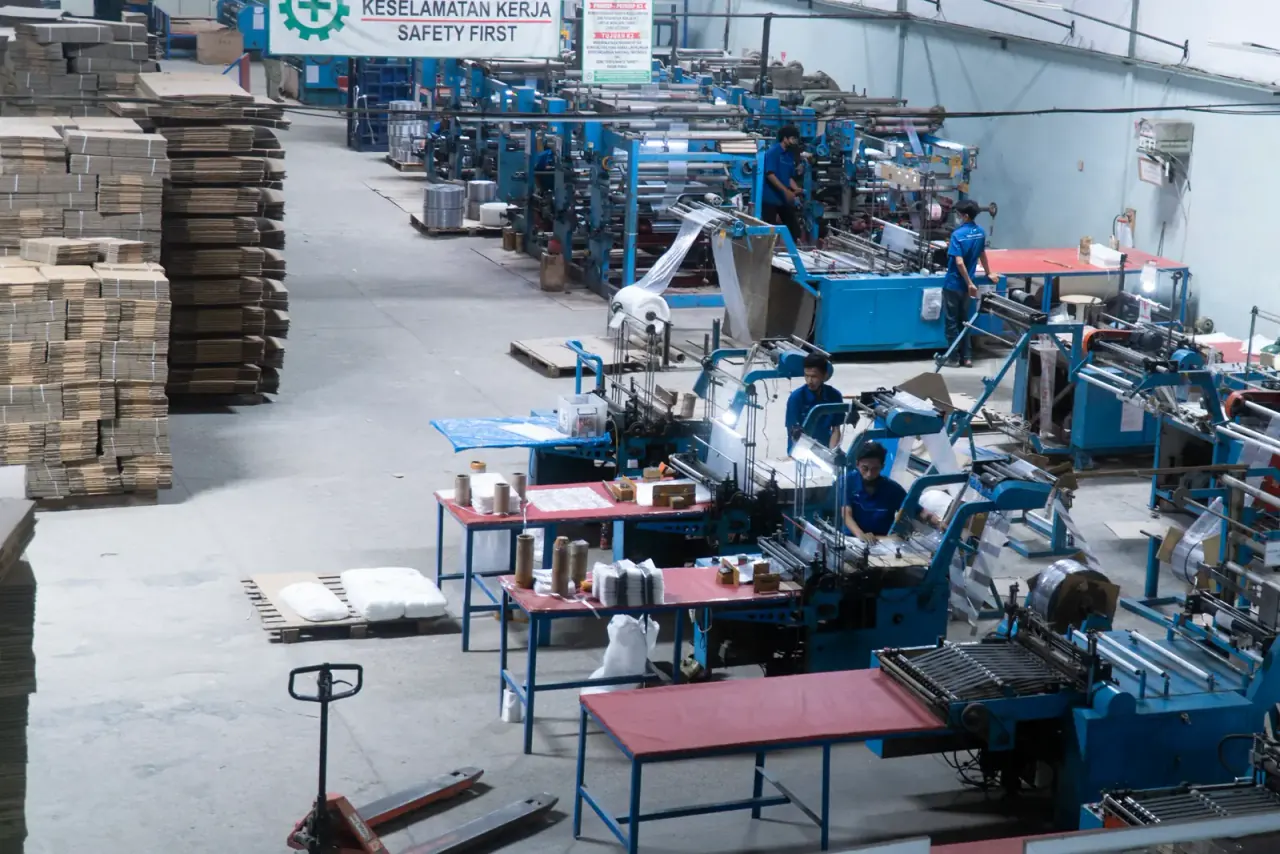
Flex-Stock: we hold buffer, ship per call-off.
We hold your packaging buffer stock and ship per call-off — warehouse load and stockout risk move to us.