
Products · Polybag
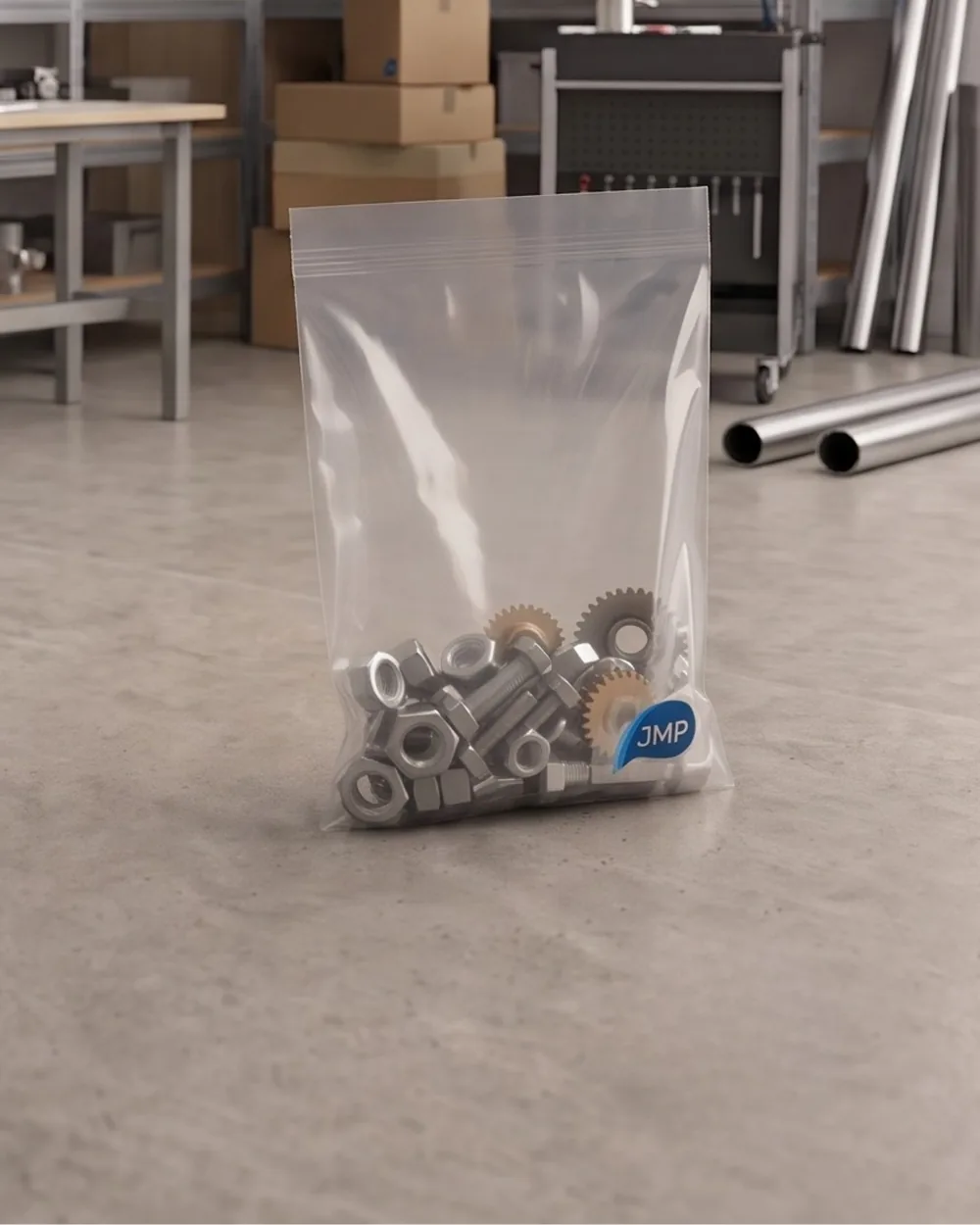
PE flat bags (bottom-seal & side-seal)
A flat bag is the most common form and the cheapest per kilo — and for most parts that is all it needs to be. What sets the price is not the shape but the micron and how many kilos run. We extrude the film ourselves, so the thickness is set by your part's weight and sharpness rather than by whatever size happens to be on the shelf.
Specification
| Construction | Flat bag — bottom-seal or side-seal Bottom-seal is the cheapest and sits flat; side-seal when the sides need to look clean |
|---|---|
| Material | PE (polyethylene) More flexible and tear-resistant than PP; opaque through to clear |
| Film thickness | 30–120 µm Set by part weight and sharpness — heavier or sharper means thicker |
| Bag width | 5–100 cm |
| Bag length | 5–70 cm |
| Printing | Flexo, optional The MOQ below is for plain bags; printed bags are counted under their own rule |
Polybag MOQ is counted by weight, not by the piece: 300 kg for unprinted bags, dropping to 100 kg for specifications we already run regularly. How many pieces come out of that weight depends entirely on bag size and micron, so we work the piece count out once your specification is settled.
Commonly used for
- Wrapping automotive parts before they go into the carton
- Dust and light-impact protection, in the warehouse and in transit
- Parts that stack or load upright — bottom-seal gives a flat base
Read next
 PE vs PP polybags: a material selection guide PE vs PP for component packaging: flexibility, clarity, heat resistance (~80°C vs ~120°C), and sealing. When to choose which, without over-speccing.
  Polybag MOQ, and how many bags you actually get per 100 kg Polybag MOQ is measured by weight: 300 kg unprinted, down to 100 kg for common specs, 200 kg printed. Plus the arithmetic for converting a tonnage into pieces. Custom PE/PP polybags 5–100 cm wide, 30–120 micron, flexo printed — MOQ is counted by the kilogram, not by the piece.