Polybags are often treated as simple — yet picking the wrong material can leave a part contaminated, the packaging torn during handling, or the cost inefficient because it was over-spec’d.
The two most common materials in manufacturing: PE (Polyethylene) and PP (Polypropylene). They look alike, but they behave differently — and each wins in a different application.
PE (Polyethylene)
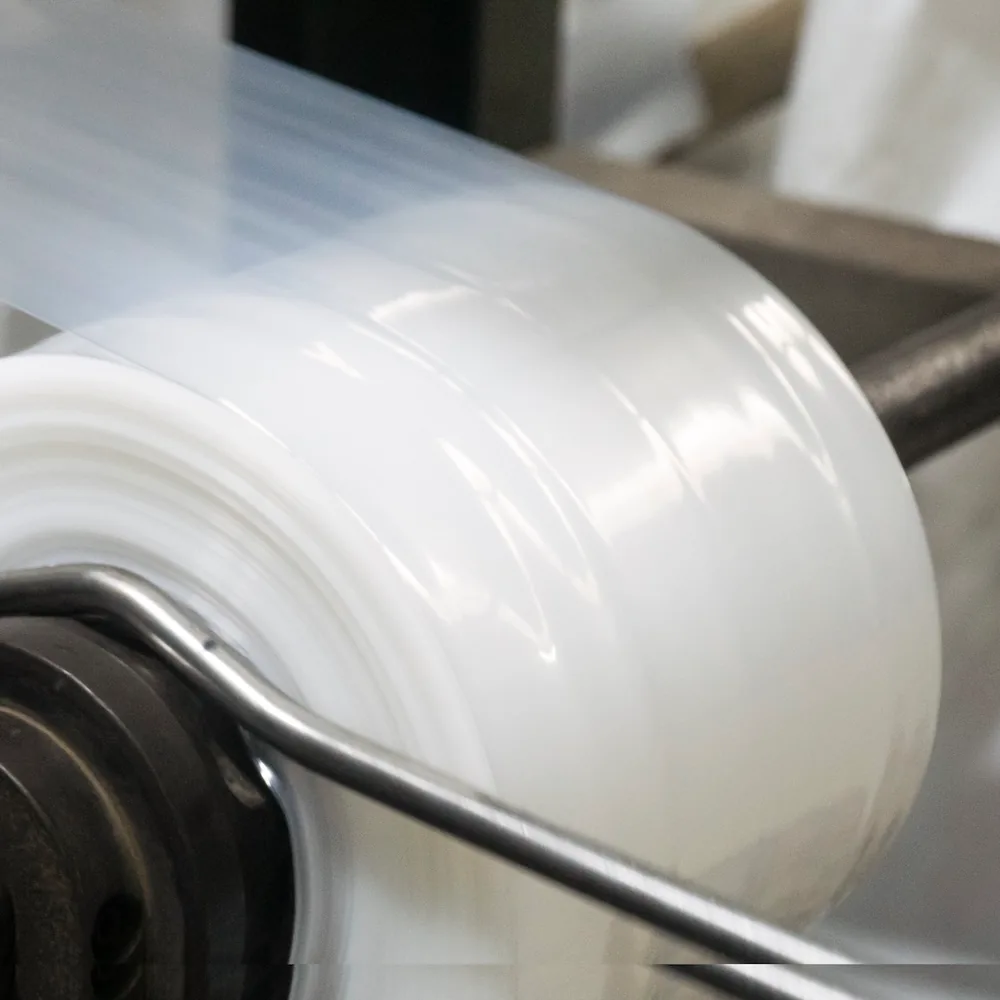
PE is made by polymerizing ethylene. What matters for industrial packaging is mainly LDPE (low-density polyethylene): the most pliable and soft, easy to form, not prone to tearing when stretched, with reasonably good transparency and high moisture resistance. LDPE is also the base material for pre-opened roll bags on automated lines.
PP (Polypropylene)
PP is made by polymerizing propylene. Stiffer and harder than PE, clearer and glossier, with a sharper printed surface. Its melting point is higher, so it withstands heat better.
Technical Comparison
| Property | PE (LDPE) | PP |
|---|---|---|
| Flexibility | Very flexible | Stiffer |
| Transparency | Medium | High, glossy |
| Heat resistance | Up to ~80°C | Up to ~120°C |
| Chemical resistance | Good for common materials | Better for acids & bases |
| Moisture resistance | Excellent | Excellent |
| Sealing | Very easy (heat seal) | Needs a higher seal temperature |
| Relative cost | More economical | Slightly more expensive |
When to Choose Which
Choose PE (LDPE) for:
- Inner packaging of components — pliable, won’t scratch the part surface
- Roll bags for automated assembly lines (pre-opened)
- Bulk packaging of small components in high quantities per bag
- Parts that need fast heat sealing on the line
- Packaging exposed to high humidity
Choose PP for:
- Parts that need visual presentation (clear appearance)
- Display or retail packaging with maximum transparency
- Parts exposed to higher temperatures during storage or shipping
- Applications that need a stiffer bag so it’s easy to fill
It isn’t about which is better: PE wins on flexibility and cost, PP wins on clarity, stiffness, and heat resistance.
Whichever material you pick, the shape that runs most often is a flat bag — bottom-seal when parts stack or load upright, side-seal when the sides need to look clean. The sizes and thicknesses we work in are on the PE flat bag page.
Thickness Matters Too
Material alone isn’t the whole picture — thickness (microns) determines protection. The range we typically work in is 30–120 µm, matched to the weight and sharpness of the part. How to read it is covered in the polybag thickness guide.
Pre-opened LDPE Roll Bags
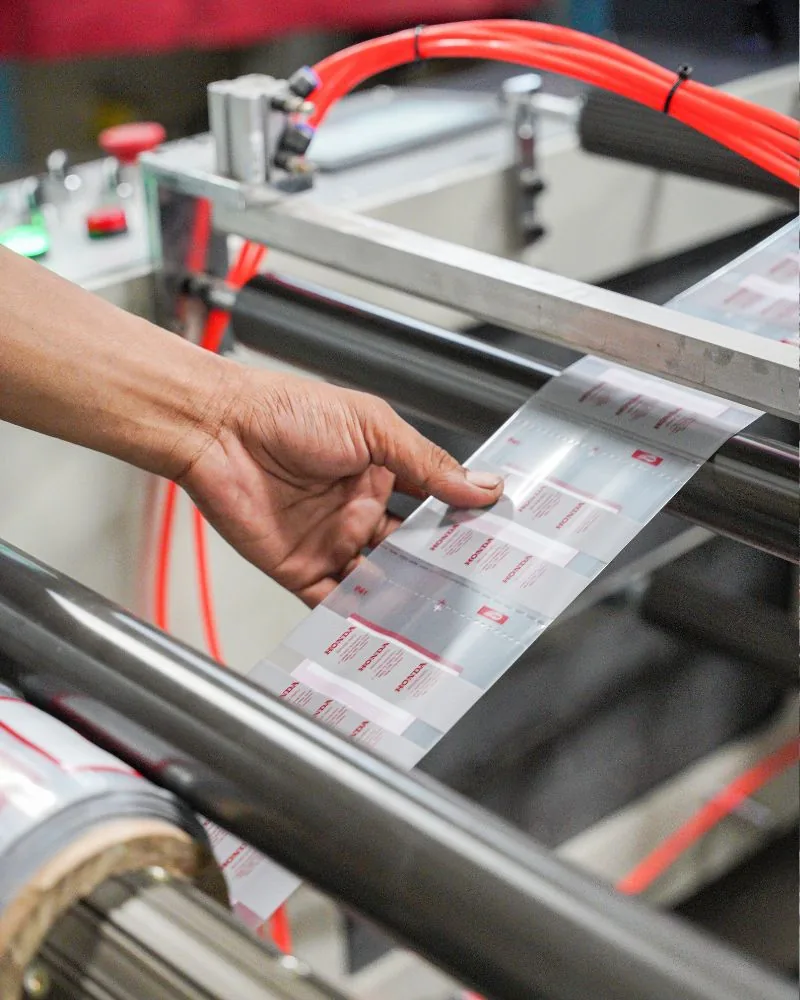
One rarely offered capability: we produce pre-opened LDPE roll bags — bags already opened and joined together on a roll, for autobag machines on automated lines. It cuts the time operators spend opening bags one by one. When this makes sense is covered in the roll bag article, and the full spec is on the pre-opened roll bag page.
Before You Order
To get the spec right, have these answers ready: the size and weight of the part per bag, whether it’s sensitive to scratching or contamination, whether printing is needed, the sealing method used, the maximum storage temperature, and whether transparency is needed for inspection.
Not sure whether it’s PE or PP, and how many microns? Send us your part details — we’ll recommend the right material and thickness. More in the polybag guide.
Source: PT Jaya Mandiri Packaging (JMP) — carton box & polybag manufacturer for the automotive industry since 1990. jayamandiripackaging.com