“Just hold it yourself, it’s cheaper.” Often true on paper — until you cost the items that never show up in the price per box.
The cost of holding your own packaging stock
Holding packaging yourself means carrying several things at once:
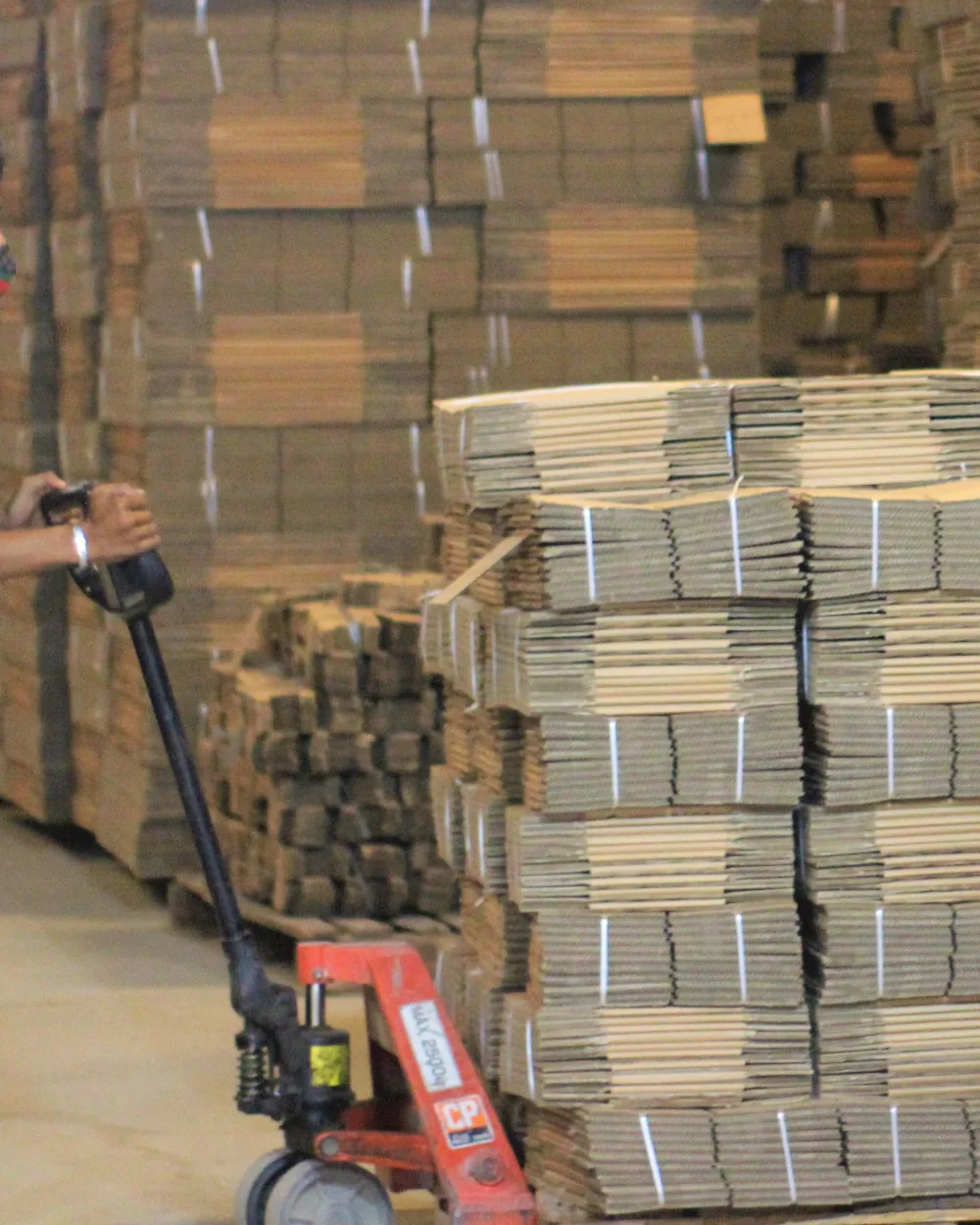
- Warehouse space. Packaging is light but it eats volume. Space for packaging stock is space not used for production or parts.
- Cash tied up. Buying a lot at once (to get a good price) means capital locked in stock you won’t use until next month.
- Run-out vs waste risk. Order little but often → repeated changeover costs and the risk of running out mid-run. Order a lot → the warehouse fills up.
- Handling. Receiving, storing, and issuing your own packaging stock takes labour and time.
What Flex-Stock (VMI) changes
With a Flex-Stock program, the supplier carries the storage: we produce ahead, hold buffer stock in our warehouse, and you call it off against your production schedule. You pay when you pull, not when we produce. Your warehouse breathes, your capital isn’t locked up, and the line doesn’t wait.
How to compare it for your case
Run the numbers for a few part numbers with demand that rises and falls:
- How much warehouse space is currently used for packaging stock?
- How much capital is locked in packaging stock at any one time?
- How many times a year do you nearly run out, or have to place a rush order?
Flex-Stock doesn’t always win for every case — for small, stable volumes, holding it yourself can be simpler. But for an automotive supplier with many part numbers and demand that shifts with OEM orders, moving the stock burden to the supplier is often cheaper than the price per box makes it look.
Want us to help you run the numbers for your parts and volumes? Send us the details, or learn how Flex-Stock works.
Source: PT Jaya Mandiri Packaging (JMP) — carton box & polybag manufacturer for the automotive industry since 1990. jayamandiripackaging.com