Packaging for automotive components has more demanding requirements than most other kinds of manufacturing. A single component plant can carry 50 to 200+ different packaging SKUs — each with its own dimensions, grammage, and print specification.
And the failure isn’t about looks. One empty packaging SKU can halt the whole packing and shipping process — with a downtime cost that far outweighs the price of the packaging itself. That’s what makes automotive packaging different: what you’re protecting isn’t the aesthetics, it’s high-value parts, batch traceability, and keeping the line running.
The Two Most Common Packaging Lines
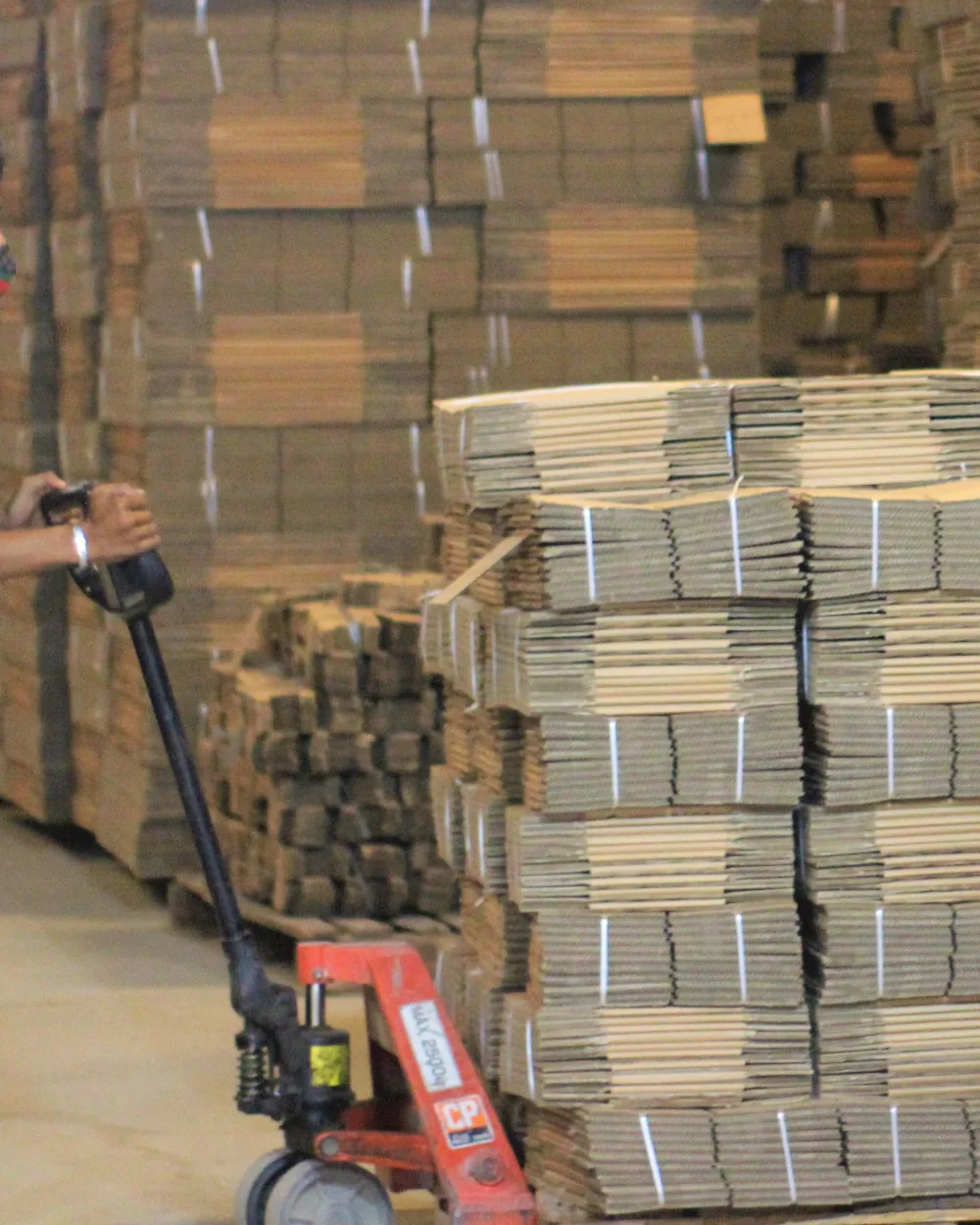
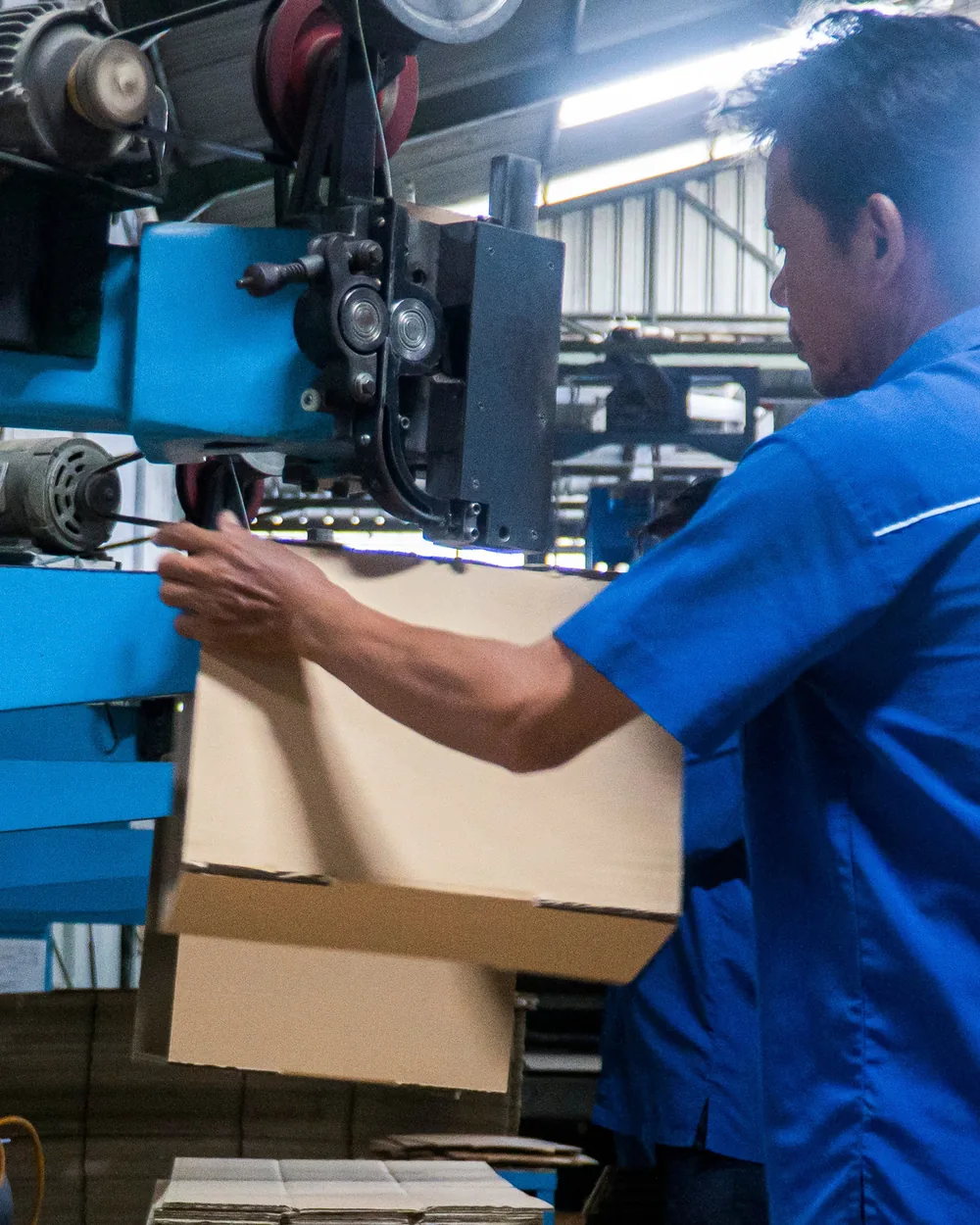
Corrugated carton boxes — the most common packaging on the automotive line. Available in several flute profiles (B, C, E, BC), each with different strength characteristics. Light parts (brackets, gaskets, small plastic components) are usually fine in B or E flute. Heavy parts (engine blocks, steel brackets, suspension components) need BC (double wall) to stay intact through transit and stacking. The details are in the flute guide.
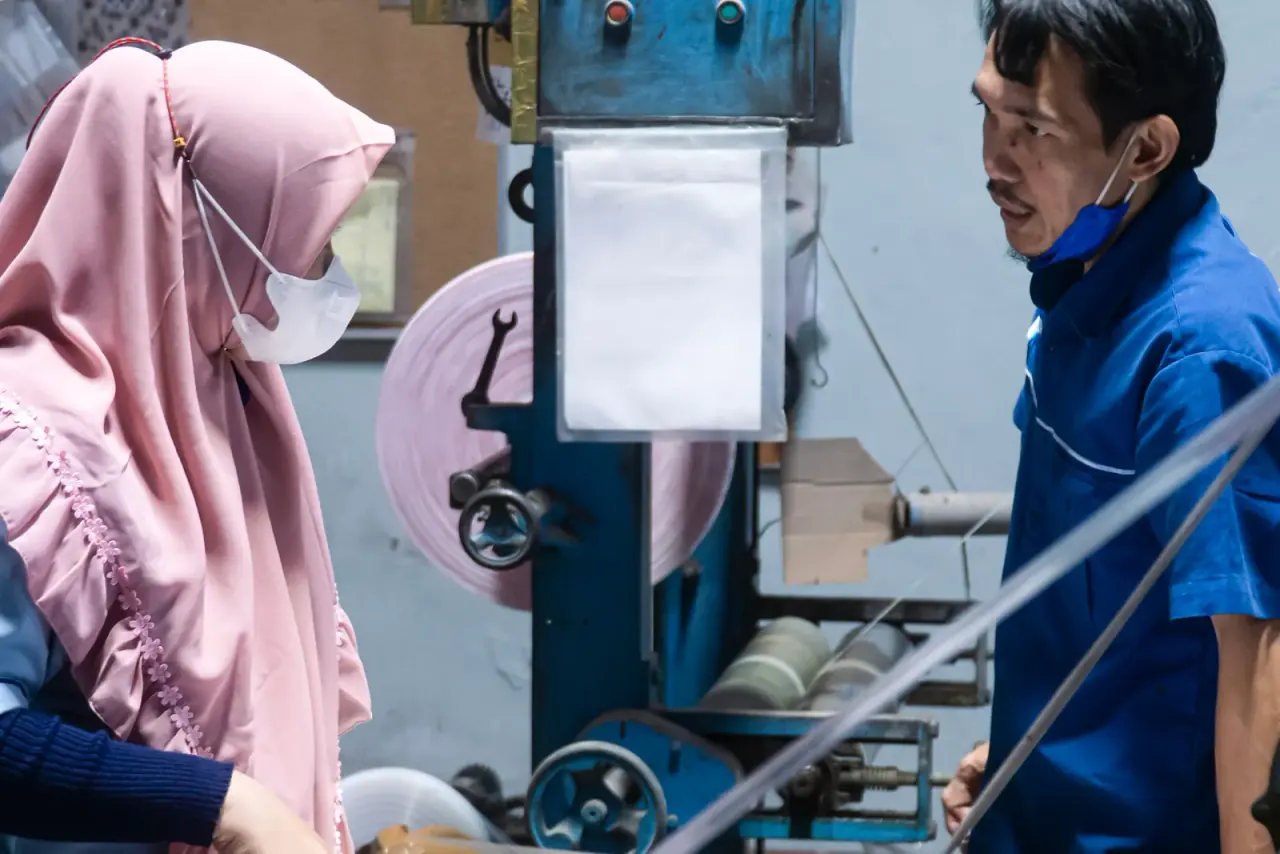
PE and PP polybags — inner protection: an individual wrap before the part goes into the carton, or the primary packaging for parts that don’t need extra impact protection. PE is more flexible and moisture-resistant; PP is stiffer and clearer. We cover the difference in PE vs PP.
The Challenge People Rarely See: SKU Management
Unlike FMCG, which has a few high-volume SKUs, automotive is the opposite: many SKUs, with fluctuating volume per SKU.
| Aspect | FMCG | Automotive |
|---|---|---|
| Number of packaging SKUs | Few (5–20) | Many (50–200+) |
| Volume per SKU | High, stable | Variable, fluctuating |
| Consequence of a stockout | Lost sales | Production line stops |
| Lead-time tolerance | Relatively flexible | Very tight |
| Traceability requirement | Standard | High (batch, lot number) |
That last column is what puts the most pressure on procurement. Holding stock across dozens to hundreds of SKUs manually, with demand that rises and falls, is a full-time job — and a single miss is felt immediately on the line.
The Specs a Packaging PO Must Include
To stay consistent from batch to batch, every automotive packaging PO should at minimum state:
- Internal dimensions (L × W × H in mm)
- Flute type (B, C, E, or BC) and wall configuration (single/double wall)
- Grammage (gsm) for each layer
- Print specification (colours, position, mandatory text such as the part number)
- Minimum compression strength standard (BCT/ECT where needed — what is BCT)
- Design revision number and effective date
In automotive, a single part changing its number or dimensions can force a change to the packaging design. Make sure your supplier has a clear revision-management system — every batch has to be traceable back to the specification that was in force when it was produced.
How to Pick a Supplier That Can Deliver
Not every packaging supplier can meet automotive operating standards. What to check:
- ISO 9001 — a standardised quality management system
- Multi-SKU capability — managing hundreds of variations at once
- Batch traceability — every shipment can be traced back to a production lot
- Buffer stock capacity — willing and able to hold your stock
- Delivery responsiveness — able to fill urgent requests within 24–48 hours
- Location — close to the automotive industrial cluster
- Track record — real experience serving automotive, not trial and error
Four of those seven points are about buffer stock and speed — and that’s exactly where the buy-per-PO model most often breaks down. The alternative is to shift the buffer onto the supplier through a Flex-Stock (VMI) program.
Where JMP Stands
For 30+ years we’ve served manufacturing and automotive across Tangerang, Karawang, Cikarang, and Bekasi. Our facility produces corrugated carton boxes and PE/PP polybags under an ISO 9001:2015 system (ISO 14001 is in progress). Two packaging lines, one roof, one QC standard — and buffer stock we can carry, so that one empty SKU no longer stops your line.
Have a lot of SKUs that keep causing headaches in stock? Tell us what you need — we’ll help you map out which ones pay off most to keep in buffer.
Source: PT Jaya Mandiri Packaging (JMP) — carton box & polybag manufacturer for the automotive industry since 1990. jayamandiripackaging.com