Three polybag quotes land on your desk. The prices are close, all three say “PE 50 micron”, and all three describe themselves as a factory. You take the cheapest — reasonable, since on paper the spec is identical.
What usually surfaces around month three: bags start splitting at the packing station, or a repeat order feels slightly different from the first one even though the spec number never changed.
Among the suppliers you’ll find searching for a polybag factory in Indonesia, some genuinely extrude their own film. Others buy finished film and cut and seal it. Both are legitimate businesses. The difference only shows up when your spec has to stay identical for a year.
Three questions that separate them
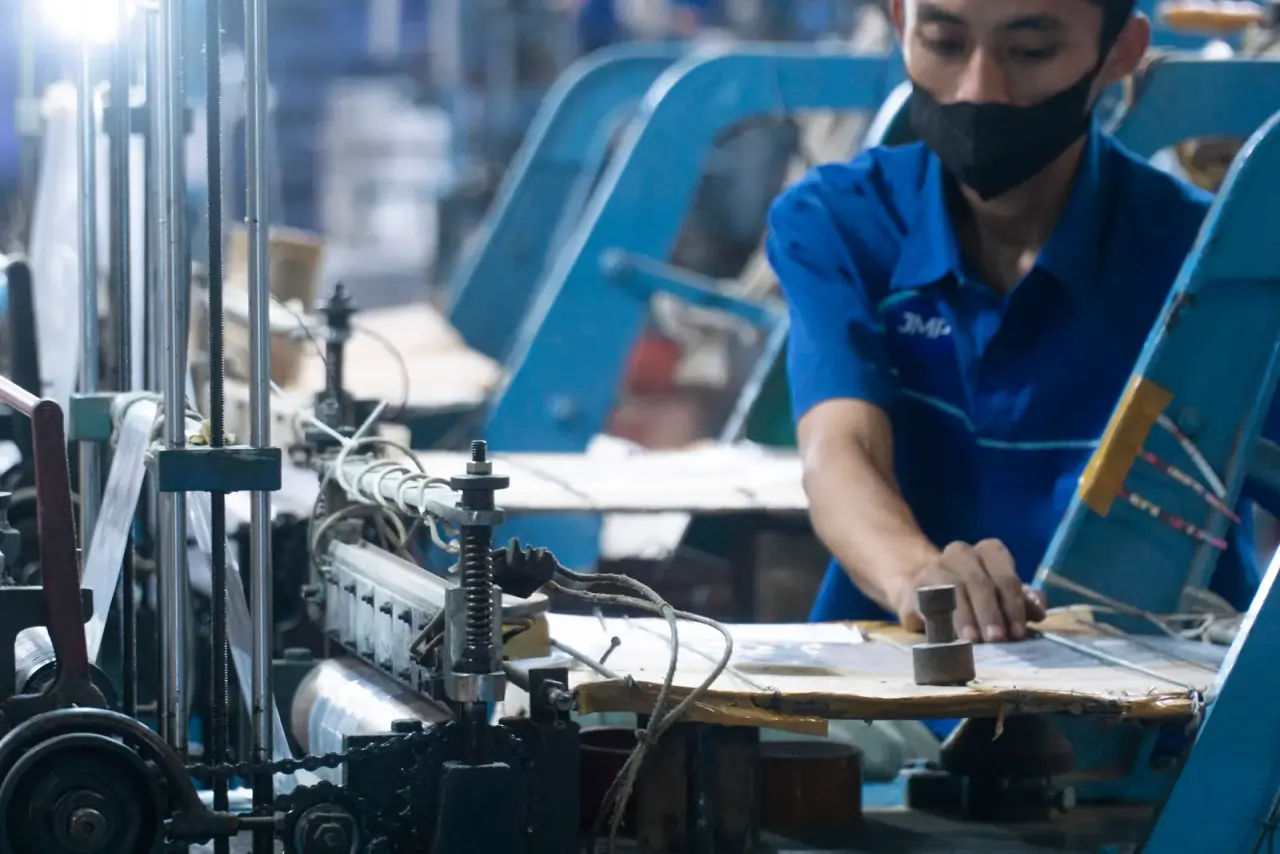
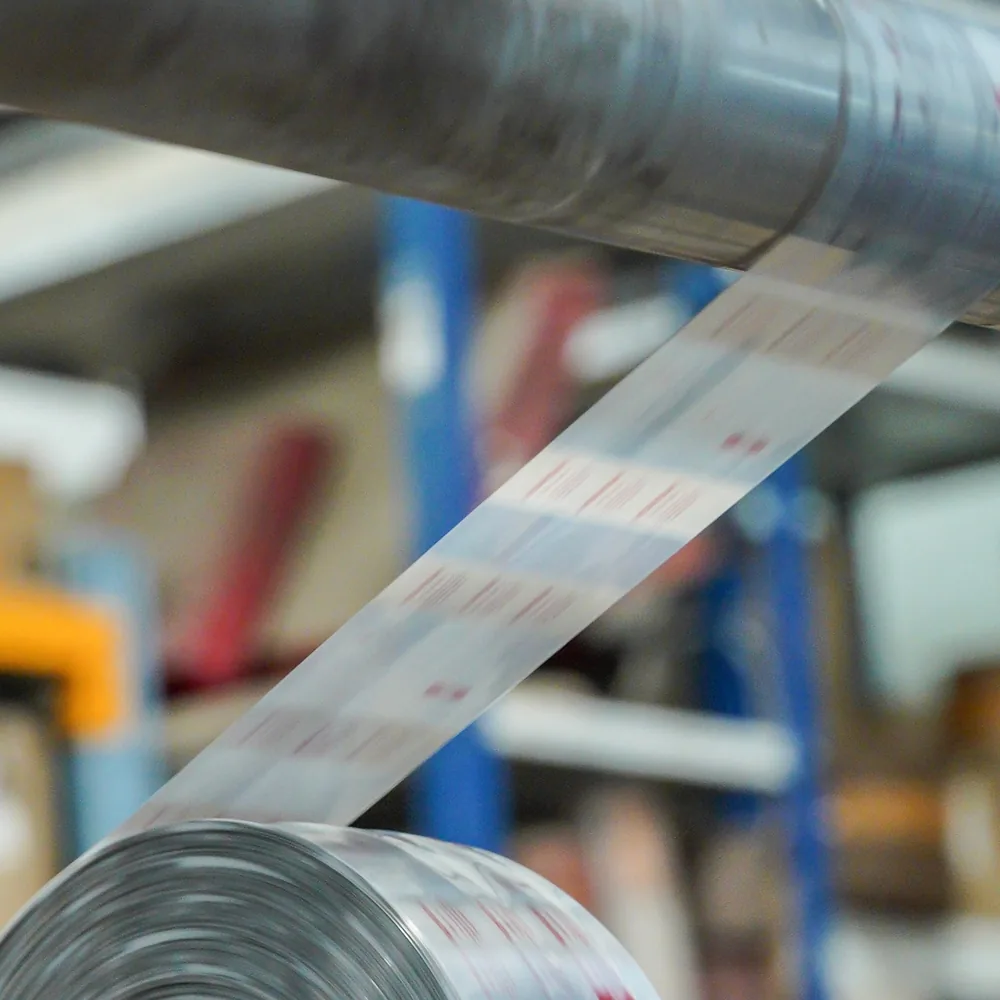
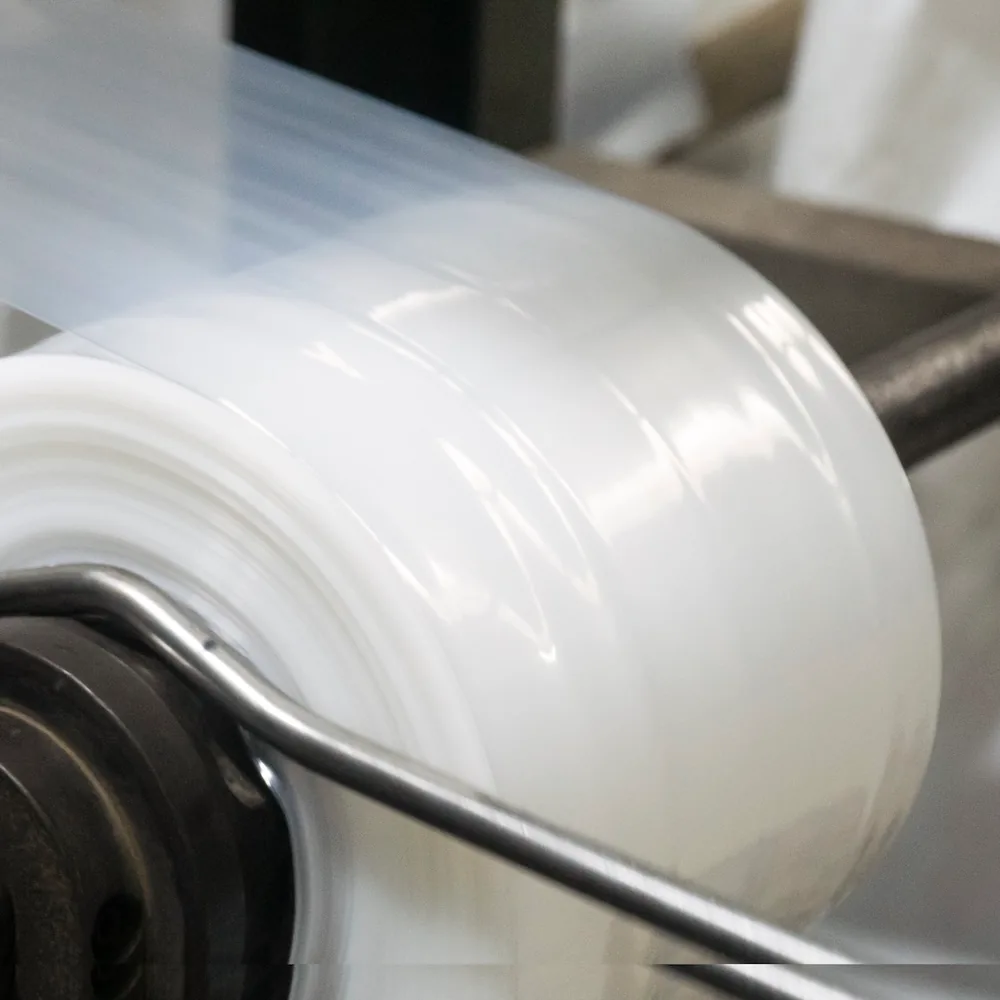
“Do you extrude the film yourself, or buy it?” If the film is bought in, the thickness you get is essentially whatever the market happens to stock, and your part adapts to that. If the film is made in-house, the micron comes from your application instead of from a shelf. We extrude our own; the range we normally run is 30–120 µm (0.03–0.12 mm).
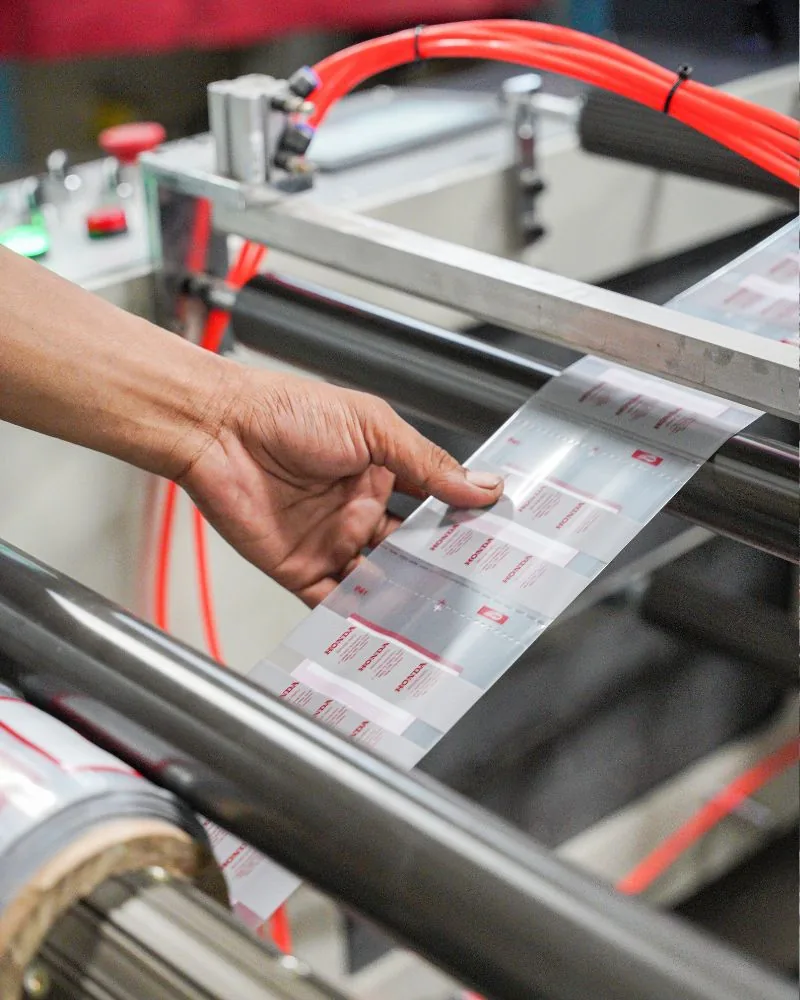
“Is printing in-house or sent out?” Every time film leaves the plant to be printed, that’s one more handover, one more queue, and one more party holding your colour standard. Our flexo printing is in-house.
“Can you make pre-opened roll bags?” This is the fastest filter. Bags that arrive already opened and connected on a roll, feeding an autobag machine, require control at the film stage — a film reseller almost never answers yes.
None of this means buying from a trader is the wrong call. For a standard size you need once, they’re often cheaper and faster, and that is the correct decision. But for a spec that repeats on a production line, every layer between you and the extrusion machine is somewhere the spec can drift without anyone intending to move it.
What to have ready
| What you’ll be asked | The form of the answer |
|---|---|
| Material | PE (LDPE) or PP — how they differ |
| Thickness | In microns, not mm |
| Finished size | Length × width, plus gusset if any |
| Printing | How many colours, how much coverage |
| Sealing | Heat-sealed on your line, or sealed by us |
| Part context | Weight per bag, sharp corners or not, how it’s handled |
The first four are usually already in the RFQ. The last two are the ones most often missing — and they’re what decides whether 50 micron is enough or whether you’re paying for thickness the part never needed.
On consistency, ask this
Every extrusion process has sheet-to-sheet thickness variation. That’s normal, not a defect. What separates suppliers isn’t whether variation exists, it’s how tightly it’s held against target — and whether it’s actually measured.
So the question isn’t “will it be the right thickness”. Ask where it’s measured, how often, and whether the result is recorded per batch. “It’ll match the order” isn’t an answer yet.
We run ISO 9001:2015 (AMTIVO, UKAS, certificate 621754). Not because a certificate looks good in a footer, but because the audit forces those records to exist and to be traceable when something gets questioned.
Polybag MOQ is measured in kilograms, not pieces
This is the most common misunderstanding early in a conversation. Polybag MOQ isn’t counted in pieces — it’s counted by weight. And the figure moves, depending on one thing: whether it’s printed.
| Type | MOQ | Note |
|---|---|---|
| Unprinted | 300 kg | Down to 100 kg when the spec is one we run commonly |
| Printed | 200 kg | For a regular design; cylinder cost quoted separately |
It makes sense from the machine’s side: what we run is film, and film is measured by weight. How many pieces you get out of 100 kg depends entirely on size and thickness — small thin bags can run to tens of thousands of pieces, large thick ones to far fewer.
Sizes we cover: 5–100 cm wide, 5–70 cm cut or roll length.
So if a supplier quotes you a polybag MOQ in pieces without stating size and micron, that number isn’t comparable to anyone else’s yet. Get the unit settled first.
On small runs, plainly: they’re expensive at changeover — switching size and colour on the line takes roughly the same time whether you order 100 kg or two tonnes. We take them anyway, because a new part always starts at low volume, and a supplier who turns you away at that point never gets to be there when the volume arrives.
Once usage is steady
For polybag that runs continuously on a line, stockpiling months of it in your own warehouse isn’t the only option. The pattern we run through Flex-Stock: we produce ahead and hold a buffer of roughly four weeks of consumption, you call off twice a week, and the delivery goes out the next morning. Your warehouse stays clear and the line stays covered. The cost comparison against holding it yourself is worked through here.
Because we run carton box and polybag under one roof, a single call-off can carry both — one schedule, one QC standard, one number to call when something slips.
Before you send the RFQ
Have the part weight, its shape, and how it’s handled on the line. Those three are enough for us to settle material and micron — and enough for you to compare quotes from anyone else on equal terms.
Not sure whether it’s PE or PP, or how many microns? Send us the part details — ten minutes on a call is usually enough to narrow it. The fuller picture is in the polybag guide.
Source: PT Jaya Mandiri Packaging (JMP) — carton box & polybag manufacturer for the automotive industry since 1990. jayamandiripackaging.com