A light steel bracket and a sensitive electronic sensor need very different packaging — even when they’re roughly the same size. Get the carton box wrong on an automotive line and you end up with parts damaged in transit, boxes crushed under a tall stack, or a traceability gap when a quality audit comes around.
This is the order we use to decide a spec, from the part through to the print.
1. Classify Your Part First
The weight and sensitivity of the part decide almost everything.
| Category | Weight | Examples | Flute |
|---|---|---|---|
| Light | < 2 kg | Sensors, rubber seals, clips | E or B |
| Medium | 2–8 kg | Brackets, small castings | C |
| Heavy | 8–20 kg | Cylinder heads, gearbox parts | BC double wall |
| Very heavy | > 20 kg | Engine blocks, axles | BC + inner pad |
2. Pick the Right Flute
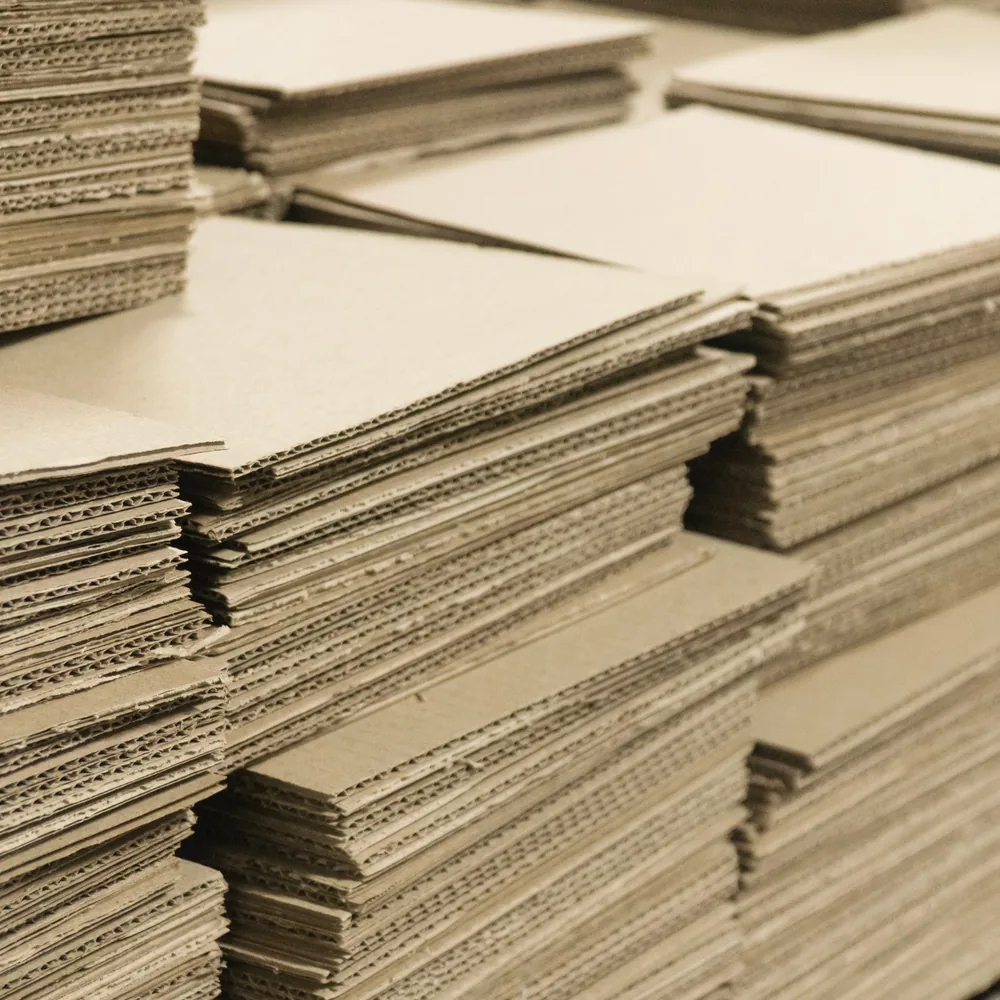
The flute is the wave in the middle layer that determines strength and cushioning. The figures in brackets below are total board thickness (both liners included), not the height of the wave itself.
- B (~3 mm) — a flatter surface, so it’s the best for detailed print (part numbers, barcodes, logos). For light parts.
- C (~4 mm) — the all-rounder. Its combination of vertical compression strength and good stackability makes it the default for medium-weight parts.
- BC / double wall (~7 mm) — B and C combined, far higher compression strength for heavy parts or tall stacks.
How to decide on enough protection without paying for excess paper is in the flute guide.
3. Set the Basis Weight (gsm)
Basis weight is the weight of the paper per square metre. The higher it is, the stronger — and the more expensive.
| Layer | Common gsm | Function |
|---|---|---|
| Outer liner | 125–200 | Outer surface — compression resistance & print quality |
| Medium (flute) | 112–150 | The wave — determines cushioning |
| Inner liner | 112–150 | Direct contact with the part |
The basis weight is set by the weight and by how the part is stacked, not one figure for everything. For the logic behind it, see how to calculate a carton’s base weight.
4. Print Specifications for Traceability
This isn’t about branding — in automotive, print is part of traceability. The minimum that needs to be there:
- Part number / drawing number
- Quantity per box
- Production date / lot number
- Packaging supplier name (for audits)
- Handling symbols (fragile, keep dry, stacking limit)
At JMP there are two print options: digital full-colour for detail and high design variation, and 4-colour flexo with a ceramic anilox + doctor blade for high volume with consistent colour held steady.
Supplier Evaluation Checklist
- ISO 9001:2015 — a verified quality system
- Able to provide a Certificate of Conformance per batch
- A clear design-revision management system
- Buffer stock / VMI capability for multi-SKU
- Delivery response < 24 hours for urgent requests
- A location close enough to your facility
- A track record serving automotive
The costliest mistake isn’t picking the wrong flute — it’s over-speccing: paying for double wall on a part that’s fine in single. Send us your part dimensions and weight, and we’ll help you settle on the right spec, strong enough without excess paper.
Source: PT Jaya Mandiri Packaging (JMP) — carton box & polybag manufacturer for the automotive industry since 1990. jayamandiripackaging.com